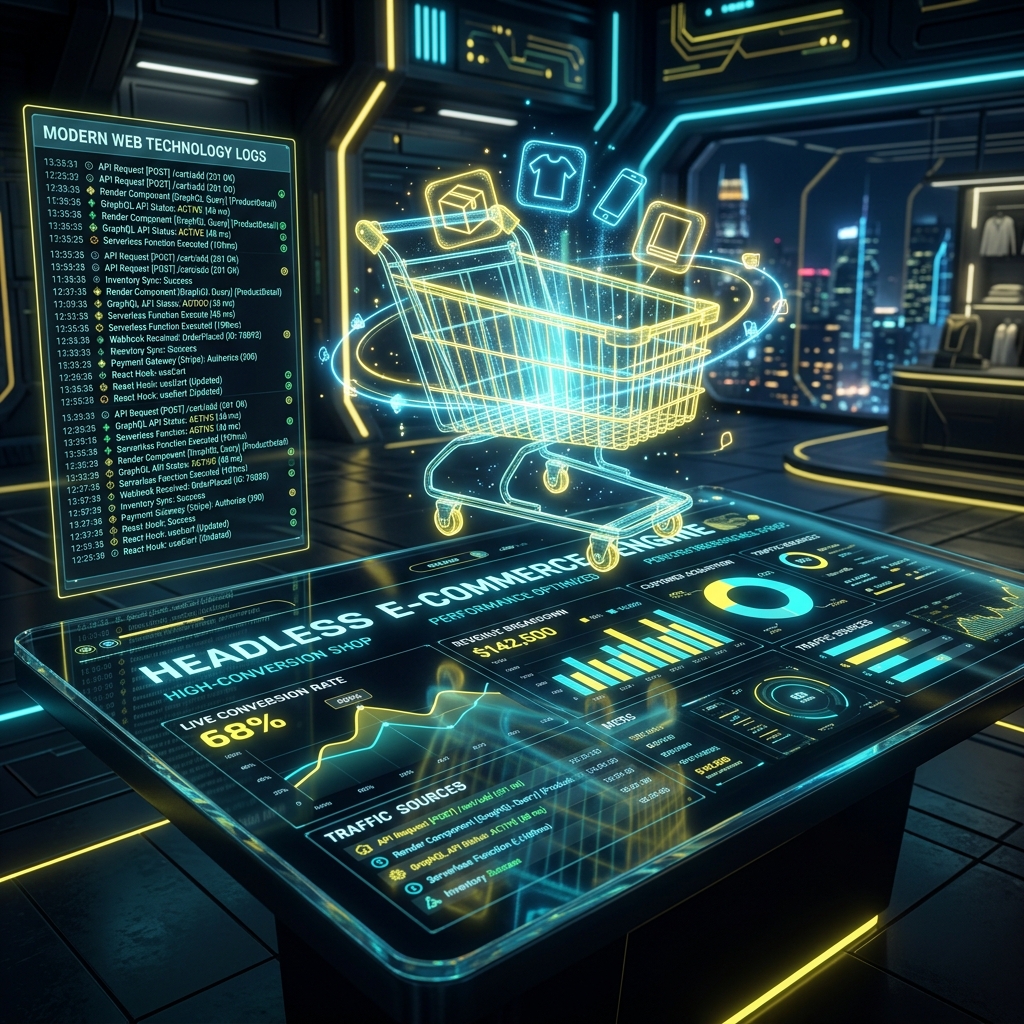
Scaling past 1,000 orders a day requires more than basic monolithic e-commerce hosting. Learn why a decoupled, headless Next.js frontend is essential to optimize conversion speeds.
Every 100ms delay in your checkout load speed cuts conversion rates by up to 7%. Monolithic setups load full database query loops for simple product views, bottlenecking transactions during flash sales. Decoupling the checkout system solves this.
1. What is Headless E-commerce?
Headless e-commerce decouples the presentation layer (the frontend website) from the database engine (Shopify, WooCommerce, or BigCommerce).
Next.js serves as the frontend storefront, requesting catalog details via fast GraphQL APIs and rendering product pages statically. Cart states and payment transactions connect dynamically to engines (like Stripe), ensuring robust operations.
Summary
Headless Next.js storefronts give you absolute layout flexibility, maximum mobile load speed scores, and bulletproof security, maximizing transaction sales.
Looking to deploy a headless store? Connect with WebNex's e-commerce architects to structure your custom migration proposal.